


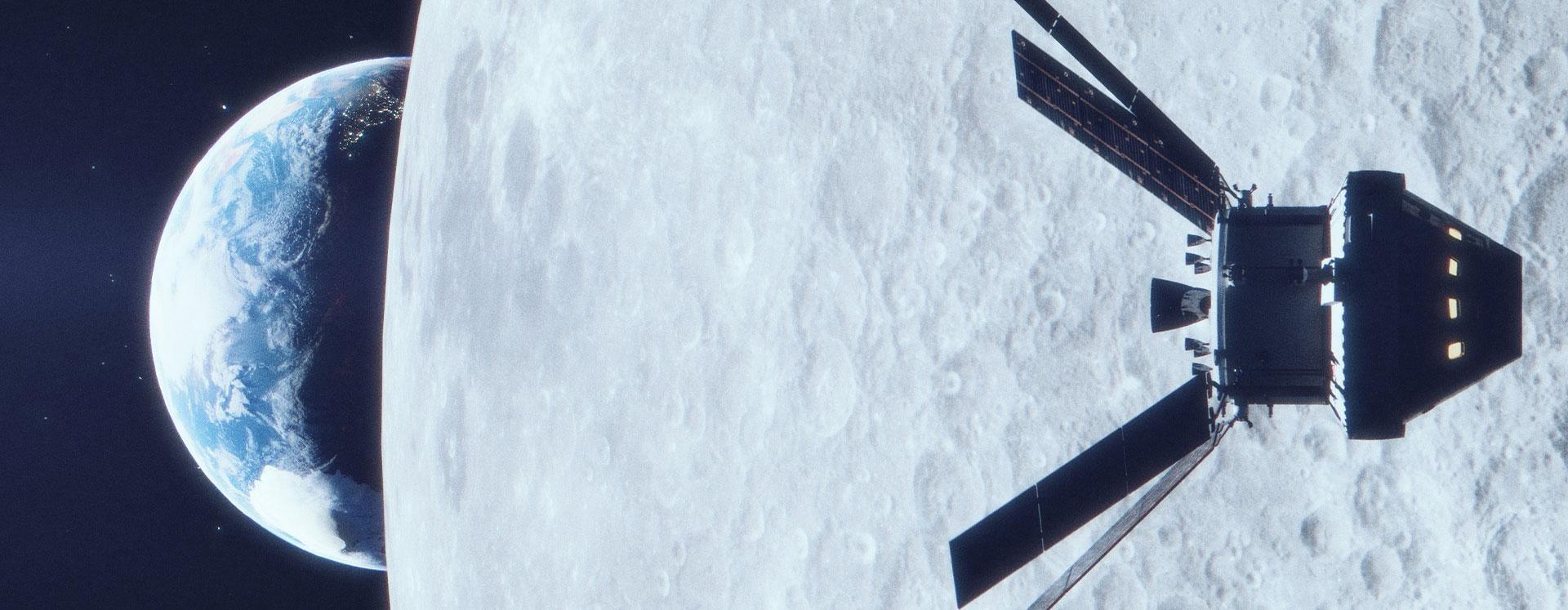
More than half a century after American astronauts last walked on the Moon, NASA is taking the dream of Apollo a step further. In the years ahead, the Artemis missions—named for Apollo’s twin sister in Greek mythology—aim to return astronauts to the Moon and establish a lunar base for scientific and commercial exploration.
Return to the Moon follows the four members of the Artemis II crew as they undertake a perilous 10-day journey around the Moon and back, venturing beyond Earth’s orbit for the first time since Apollo and traveling farther into the Solar System than any humans before them. Viewers will get an inside look at the extensive preparations required to overcome the extreme engineering challenges of human spaceflight and will follow the Artemis II mission from launch to splashdown.
As shown in Return to the Moon, Artemis II will be the first crewed test of the spacecraft’s human systems, sending astronauts on a wide looping trajectory more than 4,000 miles beyond the Moon. The mission will pave the way for future flights, including Artemis IV, aimed at putting astronauts back on the lunar surface. Building on Apollo’s legacy, Artemis pursues far more ambitious long-term goals, while operating with roughly one-tenth of NASA’s 1960s budget.
Rather than simply landing astronauts on the Moon for a few days at a time, Artemis’s goal is to create a long-term Moon base, which could one day become a center of operations for further crewed voyages to Mars...and beyond.
Premieres Wednesday, April 15 at 8 pm on Nine PBS and livestream; with daytime encores on Thursday, April 16, 2:30 pm, Wednesday, April 22, 8 pm, and Thursday, April 23, 2 pm.
Stream on the PBS app or online below.